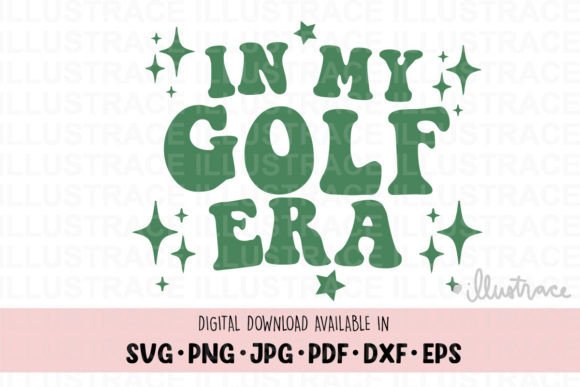
In My Golf Era Svg Review
As a designer who spends half my day troubleshooting stitch errors and the other half brainstorming viable product lines for small boutiques, I don’t just look at an SVG file; I visualize it under the needle. When evaluating In My Golf Era Svg, my first instinct is to strip away the digital polish and ask: how does this translate to thread? Does it hold up in a real-world embroidery project, or does it collapse into a messy blob of tangled fibers? This review breaks down the practical application of this design for those of us looking to create high-quality handmade products, whether for personal gifts or commercial Etsy listings.
First Impressions and Visual Personality
The phrase "In My Golf Era" taps into a specific cultural moment that blends humor with lifestyle branding. Visually, the design carries a mood that is both casual and confident. For an embroidery designer, the initial assessment revolves around layout and balance. The text-based nature of this graphic suggests a strong reliance on typography, which means the clarity of the letterforms is paramount. In the world of machine embroidery, text can be unforgiving. If the curves are too tight or the spacing inconsistent, the resulting satin stitch will pucker or break.
This particular design feels like it belongs in the realm of lifestyle apparel and accessories. It doesn’t scream "professional tournament gear"; instead, it whispers "weekend warrior" or "golf enthusiast with a sense of humor." This distinction is crucial when deciding where to place the final product. It fits naturally on a tote bag design meant for carrying clubs, or perhaps as a playful accent on a sweatshirt embroidery piece for a cozy round of links. The visual personality is approachable, making it highly suitable for personalized gift scenarios, such as birthday presents or holiday surprises for the golfer in your life.
Real-World Application: From Screen to Stitch
Let’s imagine a concrete scenario. You are preparing a batch of custom merchandise for a local golf club’s end-of-season party. You want something that isn’t overly serious but still looks polished. You decide to use In My Golf Era Svg on heavyweight cotton canvas tote bags. Here is how the execution plays out in practice.
When digitizing or converting this vector for a machine embroidery design, the placement becomes strategic. A large chest placement on a hoodie might feel cluttered, but a centered pocket placement on a tote bag allows the design to breathe. The clean lines of the SVG translate well to fill stitch areas if you choose to add graphical elements, but the primary focus remains on the text. For a custom apparel item like a cap, the curvature of the fabric adds a layer of complexity. The design must be tested to ensure the text doesn’t distort excessively around the curve of the hat front.
Furthermore, consider the audience. This design appeals to hobbyists and craft business owners alike. For an Etsy seller, the versatility is key. The same file can be used for a digital embroidery file listing, sold as a cut file for vinyl stickers, or printed on card stock signs for home decor. However, our focus here is strictly on the textile application. The design’s strength lies in its ability to serve as a focal point without overwhelming the garment. It works beautifully for baby embroidery projects too, perhaps scaled down for a onesie or a nursery blanket, adding a touch of future sports fandom to a newborn’s wardrobe.
Technical Considerations and Fabric Choices
No design exists in a vacuum. The success of In My Golf Era Svg depends heavily on the substrate. While the vector itself is sharp, embroidery introduces texture. On smooth fabrics like polyester blends or tightly woven cottons, the design will likely render with crisp edges. However, caution is advised when working with textured fabrics. Thick terry cloth or fuzzy fleece can obscure fine details, turning what should be a clear message into a muddy patch of color.
Stitch density is another critical factor. If the original digitization (or your own conversion) uses too much thread per square inch, the fabric may pucker, especially on lightweight materials. Always inspect small details before committing to a full production run. If the design includes tiny decorative accents or intricate corners, these are the first areas to fray or lose definition after washing. For a finished product that needs to withstand frequent laundering, such as a kitchen towel or an apron, ensuring proper stabilization is non-negotiable. Using the correct stabilizer prevents the hoop marks from showing and keeps the tension even across the embroidery project.
Color contrast cannot be overstated. On dark fabric backgrounds, light thread colors are essential for readability. Conversely, using dark threads on light fabric provides a classic, understated look. Test your thread colors against your chosen fabric swatches. A black-on-black design might look sleek in a digital mockup but disappear completely once stitched. Similarly, on stretchy fabrics like jersey knits, the inherent flexibility of the material can cause the stitches to gap if not anchored properly with a tear-away or cut-away stabilizer.
Where to Exercise Caution
- Small Hoop Sizes: Avoid attempting to stitch this design in hoops smaller than 4x4 inches unless you have verified that the smallest details remain distinct. Tiny text often loses legibility when compressed.
- Curved Surfaces: When applying to caps or curved items, the perspective shift can make straight lines appear bent. Use a specialized cap frame and adjust the design angle if necessary.
- Dense Stitch Areas: If the design relies heavily on dense fills, ensure your machine’s hooping mechanism can handle the bulk without skipping stitches.
- Thin Fabrics: Delicate materials may tear under the stress of heavy stitching. Stick to medium-to-heavy weight fabrics for best results.
Impact on Brand and Customer Perception
For small shop owners and commercial embroidery practitioners, the quality of the design directly influences customer trust. A sloppy stitch job signals low effort, whereas a clean, well-executed handmade product commands a higher price point and fosters brand loyalty. In My Golf Era Svg, when executed correctly, elevates the perceived value of the item. It transforms a basic tote bag or sweatshirt into a statement piece.
Moreover, the design’s relatability drives engagement. Customers love buying items that reflect their identity or hobbies. By offering this design, you are tapping into a community that values both sport and style. This makes it an excellent choice for holiday embroidery campaigns, where shoppers are looking for unique, personalized gifts rather than generic store-bought items. The ability to customize colors or add names alongside this graphic further enhances its appeal as a small shop product.
Final Designer Notes
Before adding In My Golf Era Svg to your production workflow, take these practical steps:
- Test on Scrap: Never skip the scrap fabric test. It reveals issues with tension, stability, and color matching that digital previews hide.
- Check Licensing: Confirm whether the file allows for commercial use of finished goods. This is vital for Etsy sellers and craft business owners to avoid legal pitfalls.
- Review in Black and White: Convert your mockup to grayscale to ensure there is sufficient contrast between the thread and the fabric.
- Inspect Details: Zoom in on the smallest letters and curves. If they look jagged or disconnected, the final embroidery may suffer.
Ultimately, In My Golf Era Svg is a versatile asset for any designer’s library. It balances humor with aesthetic appeal, making it suitable for a wide range of applications from apparel decorators to creative entrepreneurs. With careful attention to fabric choice, stabilization, and stitch quality, this design can become a staple in your collection of design assets, helping you create memorable finished products that resonate with customers.