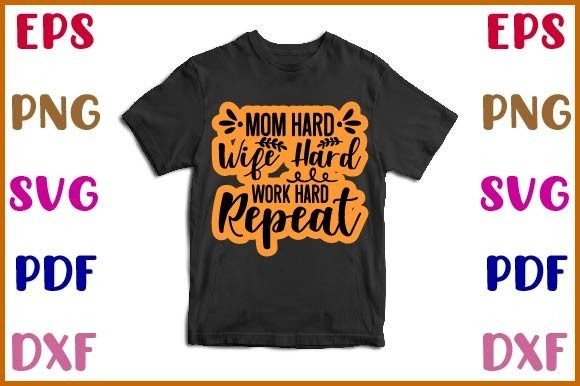
Mom Hard Wife Hard Work Repeat Stic Review
As an embroidery designer who has stitched thousands of files for everything from boutique branding to personal gifts, I have learned to look past the flashy preview image and focus on what actually happens when the needle hits the fabric. When I first pulled up Mom Hard Wife Hard Work Hard Repeat Stic, my initial reaction was one of cautious optimism. The title alone suggests a specific niche: the overwhelmed but resilient mother, wife, and worker. It taps into a very real, relatable emotion that drives many purchases in the handmade market. But does it translate well from a digital screen to a physical hoop? That is the question every craft business owner needs to answer before adding this to their inventory.
First Impressions and Visual Personality
The design immediately communicates a mood of humorous exhaustion mixed with pride. In the world of custom apparel, emotional resonance is just as important as technical execution. This file feels like it belongs in the category of statement pieces rather than subtle elegance. The layout appears bold, likely relying on strong typography or a central graphic element that commands attention. For a designer, this means we are looking at a piece that will work best when given space to breathe on the garment.
Visually, the "Stic" aspect of the title hints at a sticker-like aesthetic or perhaps a badge-style composition. This is crucial for embroidery because flat graphics often lose their impact if they are too small. The design seems to lean towards a lifestyle product—something you would wear while running errands, heading to a coffee date, or working from home. It creates a sense of camaraderie among women who feel the same way, which is a powerful driver for word-of-mouth marketing and social media shares.
Real-World Application: Where Does It Shine?
I envision this design finding its natural home on medium-to-large surface areas where the text or graphic can be read clearly without distortion. A heavy cotton sweatshirt or a structured tote bag design comes to mind first. These materials provide the stability needed to support the weight of the thread without puckering. For an Etsy seller or small shop product owner, these are high-demand items that pair perfectly with a bold, conversational message.
Beyond apparel, this could serve as a fantastic personalized gift for holiday embroidery projects. Imagine a custom embroidered patch applied to a denim jacket or a baby item like a onesie or bib (though care must be taken with sizing for infants). The phrase "Work Hard Repeat" resonates with anyone balancing multiple roles, making it an ideal wedding gift or housewarming present for a new homeowner who loves to cook and clean. In those contexts, placing the design on a kitchen towel or apron adds a touch of humor to daily chores.
For commercial embroidery projects aimed at corporate gifting or team building, this design might be too casual unless the company culture is explicitly laid-back. However, for boutique branding targeting young mothers, it fits seamlessly into a collection of empowering merchandise. It also works well as a printable mockup for digital sellers who want to showcase how the design looks on various products before committing to physical production.
Technical Considerations and Potential Pitfalls
No design is perfect, and understanding where a file might struggle is key to maintaining customer trust. One area to watch closely is stitch density. If the text is tightly packed, it may become difficult to read after washing, especially if the wrong thread colors are chosen. High-density fill stitch areas can make lightweight fabrics feel stiff and uncomfortable. Therefore, testing on scrap fabric is non-negotiable. You need to see how the threads lay against the weave of your chosen material.
Fabric texture plays a huge role here. On a smooth jersey knit t-shirt, the design might shift during stitching if not stabilized properly. Conversely, on a textured linen or canvas tote bag, fine details might get lost. I recommend avoiding this design for small hoop sizes unless you are confident in the machine’s ability to handle intricate corners without breaking thread. Curved surfaces like caps or hats present another challenge; the curvature can distort straight lines, so always inspect the design in a 3D mockup or on a curved form before mass-producing.
Another critical factor is contrast. If you plan to use this on dark fabric, ensure the thread colors offer enough brightness to pop. Muted tones might disappear into a black background, ruining the visual appeal. Similarly, on light fabrics, avoid using pale yellows or whites unless you intend for a tonal, subtle look. For maximum impact, bold contrasts usually win in the handmade product market.
Practical Designer Notes for Execution
- Stabilizer Choice: Always match your stabilizer to the fabric weight. A cut-away stabilizer is generally safer for stretchy knits to prevent distortion over time, while tear-away might suffice for stable wovens like canvas.
- Hoop Size Verification: Confirm the exact dimensions of the final stitched area. If the design is large, ensure your machine’s hoop size accommodates it without requiring re-hooping, which can misalign the placement.
- Thread Color Testing: Test the design in black and white first to check for clarity, then experiment with thread colors. Avoid using more than three or four colors unless the design specifically benefits from complexity, as too many changes can increase production time and cost.
- Licensing Check: Before selling finished items or offering this as a digital embroidery file, carefully review the usage rights. Some designs are restricted to personal use only, which can lead to legal issues if sold commercially on platforms like Etsy.
- Quality Control: Inspect small details and decorative accents closely. Run stitch errors are common in complex designs, so trimming loose threads and checking for puckering ensures a professional finished product.
Final Verdict on Market Fit
Mom Hard Wife Hard Work Hard Repeat Stic is not just another generic quote file; it carries an attitude that appeals to a specific demographic. For designers looking to expand their catalog with relatable, humorous content, this is a solid addition. It performs best when applied to sturdy garments and accessories that can handle the visual weight of the design. While it requires careful attention to fabric choice and stabilization, the payoff in terms of customer engagement is high. People buy these items because they feel seen and understood.
If you are a crafter or maker looking to add value to your handmade product line, this design offers a low-risk, high-reward opportunity. Just remember to test thoroughly, respect the licensing terms, and present it professionally. When done right, a simple phrase stitched onto a quality garment can become a bestseller. It transforms a basic accessory into a statement piece that customers are proud to wear and share.
In summary, this design excels in categories like custom apparel, holiday gifts, and personalized merchandise. It struggles in overly delicate applications or on highly textured surfaces where detail loss is likely. By keeping these practical insights in mind, you can leverage the emotional power of the phrase while ensuring technical excellence in every stitch.