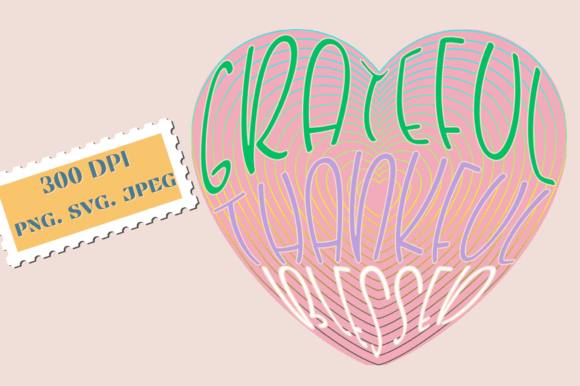
Grateful, Thankful, Blessed Embroidery Review
As a designer who spends more time looking at stitch density and fabric tension than scrolling through endless digital marketplaces, I approach every new embroidery file with a healthy dose of skepticism. We have all been there: you download a trendy design, expecting it to look like the preview, only to find it becomes a tangled mess on the hoop. Today, I am evaluating the Grateful, Thankful, Blessed sublimation clipart set. While marketed as high-resolution digital clipart in SVG, PNG, and JPG formats, my focus here is strictly on its potential application as a machine embroidery design. Can this graphic translate effectively into thread? Does it hold up under the scrutiny of a real-world craft business or personal gift project?
First Impressions and Visual Mood
The immediate appeal of Grateful, Thankful, Blessed lies in its emotional resonance. The phrase itself is a staple in the handmade community, evoking warmth, gratitude, and comfort. Visually, the layout suggests a balanced composition that works well for central placement on garments or accessories. Unlike overly ornate designs that scream for attention, this piece feels grounded and timeless. It does not rely on fleeting trends but rather taps into a perennial demand for positive, affirming messaging.
For an embroiderer, the "personality" of a design is just as important as its aesthetic. This design feels approachable. It is not aggressive or loud; instead, it whispers a sense of calm. This makes it incredibly versatile. You can easily imagine this on a soft, heathered sweatshirt for a cozy autumn day, or perhaps stitched onto a neutral-toned apron for a home baker. The visual weight of the text appears even, which is crucial for maintaining readability after stitching. If the letters were too thin or the spacing too tight, the stitch density would cause them to merge, ruining the message. Based on the vector nature of the included SVG files, we can assume clean lines that should translate well into satin stitch outlines or structured fill areas.
Real-World Application Scenarios
Let us move beyond theory and talk about where this design actually lives in the wild. I recently considered using a similar concept for a batch of custom embroidered tote bags intended for a local artisan market. The goal was to create a handmade product that felt personal yet professional enough for a boutique shelf. Grateful, Thankful, Blessed fits this niche perfectly.
Imagine a sturdy canvas tote bag. Placing this design on the front pocket creates an instant connection with the buyer. It speaks to the values of the target customer—someone who appreciates mindfulness and simple joys. Furthermore, this design is highly adaptable for personalized gifts. It works beautifully on baby clothes, such as onesies or burp cloths, where parents love to display sweet sentiments. The phrase is appropriate for all ages, making it a safe choice for nursery decor items like quilt squares or pillow covers.
For Etsy sellers and small shop owners, versatility is money. This design can be scaled down for use on embroidered patches meant for denim jackets or backpacks. It can also be enlarged for larger projects like throw blankets or kitchen towels. The fact that the source files are available in multiple formats (SVG for cutting or digitizing reference, PNG/JPG for mockups) adds significant value. You can create printable mockups quickly to showcase how the final finished product will look without having to stitch every single variation before listing it online.
Technical Considerations and Potential Pitfalls
While the design is promising, no embroidery project is without its challenges. As a reviewer, I must highlight where caution is needed. First, consider the hoop size. If you plan to place this on a curved surface like a baseball cap or a beanie, ensure your digitizer has accounted for the curvature. Flat designs often distort when pulled taut around a curve, causing the text to stretch unevenly. Always test on a scrap piece of the actual garment fabric first.
Fabric texture plays a huge role in the final outcome. On a smooth cotton tee, the stitches will lay flat and crisp. However, on a textured fabric like chenille or a thick fleece, fine details might get lost. If the original design includes delicate decorative accents or tiny lettering, these could become muddy or disappear entirely into the nap of the fabric. In such cases, simplifying the design or increasing the stitch density slightly might be necessary to maintain clarity.
Thread color contrast is another critical factor. The effectiveness of Grateful, Thankful, Blessed relies heavily on the visibility of the text against the background. On dark fabrics, light-colored threads are essential to prevent the design from getting swallowed up. Conversely, on white or light fabrics, dark threads provide a sharp, professional look. Avoid low-contrast combinations, such as navy thread on black fabric, unless you are aiming for a very subtle, tonal effect. Also, keep in mind that frequent washing can cause some thread colors to fade or pill, so selecting high-quality polyester or rayon threads is advisable for items that will see heavy use.
Practical Tips for the Embroidery Designer
- Test on Scrap Fabric: Never commit to a final product without running a test stitch-out. This allows you to check for tension issues, thread breaks, or alignment problems.
- Review Stitch Density: Ensure the design is not too dense for the chosen fabric. Too much thread can cause puckering, especially on lightweight materials.
- Check Small Details: Zoom in on the digital file. Are there any tiny elements that might not survive the digitization process? If so, consider removing them or enlarging the overall design.
- Use Proper Stabilizer: The right stabilizer is non-negotiable. For stretchy fabrics like jersey, use a cut-away stabilizer to prevent distortion over time. For woven fabrics, a tear-away may suffice for lighter designs.
- Black and White Mockups: View your design in grayscale to ensure there is sufficient contrast between the thread and the fabric.
Conclusion: A Solid Choice for Versatile Projects
In summary, Grateful, Thankful, Blessed is a strong candidate for designers looking to add meaningful, marketable pieces to their repertoire. Its clear visual hierarchy and positive sentiment make it suitable for a wide range of applications, from custom apparel to holiday embroidery gifts. While it requires standard due diligence regarding fabric choice and stitch settings, the potential reward is high. It offers a professional, polished look that resonates with customers seeking quality and authenticity in their small shop products.
For those selling digital assets or finished goods, this design provides excellent flexibility. It bridges the gap between casual crafting and commercial viability. Just remember to respect licensing terms if you intend to sell the finished items, and always prioritize testing to ensure your embroidery project meets your own high standards. When executed correctly, this design can be a heartwarming addition to any maker’s collection, bringing a touch of gratitude to every stitch.